
"Ethiopia coffee history"
3000 article(s) found

A brief introduction to the history and culture of the origin and development of Sidamo Shakiso boutique coffee beans
The highlands of western Ethiopia have given birth to new varieties of coffee that are resistant to fruit disease or leaf rust. Ethiopia has many world-famous types of coffee. Some of the main types of coffee are famous for their unique aroma and flavor, including the following: Limu coffee, which grows between 1400 and 2000 meters above sea level.

A brief introduction to the History and Culture of the Origin and Development of Fine Coffee beans in Lemon and Citrus-flavored Shakiso area
The coffee producing areas of Ethiopia are Sidamo, Harald and Sidamo, Harrar and Yirgacheffe. Sidamo and Harrar are provinces and divisions. Sidamo is located in the south of Ethiopia bordering Kenya, and Harrar borders Somalia in the east of Ethiopia. Although Yirgacheffe is a community in the Sidamo region, due to soil composition and water content and other reasons.

A brief introduction to the Origin, Development, History and Culture of Essex plus Chuefei Water-washed Wakayega original Fine Coffee beans
Introduction: this bean comes from a single farm Ethiopia and is processed by Waka Cooperative (Worka cooperative). Alemayehu Alako Farm is a member of the Waka Cooperative. The Waka Cooperative, located in the south of Gedeb District, was founded in 2005 and joined the famous Yejia Sheffield Coffee Farmers Cooperative Union (YCFCU,Yirgacheffe Coffee Farmers Co).
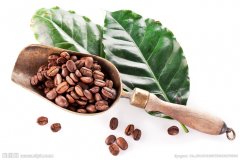
Panama Panamanian Coffee History Goddess Manor High-priced boutique coffee
In 1931, he obscure exported Kenya from Geisha Mountain Mountain in southwestern Ethiopia to Tanzania and Costa Rica, then transplanted to Panama in the 1960s, and then went through nearly half a century before he became a blockbuster, defeating the victorious armies such as Bourbon, Kaddura, Kaduai, Tibica and so on, winning 2005 in one breath.

The Cultural History of Fine Coffee the Coffee History of Arab East Africa
The word Mocha has many meanings. After 600 AD, the first coffee bean far from its hometown, Ethiopia, took root in the leaf gate on the other side of the Red Sea, and the coffee industry began all over the world. Since the most important export port of early Yemen coffee was the port of Mocha (now silted up), the coffee produced in Yemen was also called "mocha" beans. Over time, some people

A brief introduction to the History and Culture of the Origin and Development of Fine Coffee beans in Ted Manor
Located in the most advantaged natural conditions, Ethiopia produces unique high-quality coffee every year. Ethiopia's coffee growing cycle brings the joy of harvest to the country every year. Beautiful white coffee flowers will bloom and bear fruit every year from March to April. Only the reddest and ripe fruits will be selected between September and December.

A brief introduction to the History and Culture of the Origin and Development of Banqi Magi Fine Coffee beans
Although the flavor of Bancimaji Gesha Estate is different from that of Panamanian Geisha, it is still worth tasting. It is rare in many sun-dried bean regions in Ethiopia, distinguished from other coffee by its varied spices and fruit flavors. This estate is owned by Gashaw Kinfe Desta and is very close to the town of Geisha. Geisha Town is also a well-known variety G

A brief introduction to the History and Culture of the Origin and Development of Fine Coffee beans in Ted Manor
Ethiopians have a penchant for coffee, with an annual per capita coffee consumption of 3 kg. Ethiopia ranks first in terms of coffee consumption in Africa and, if compared with European countries, can also rank among the top-middle coffee consuming countries in Europe. Now, Ethiopia produces coffee not only for drinking, but also for coffee lovers around the world to enjoy it better.

The History and Culture of Fine Coffee the Coffee History of Arab East Africa
The word Mocha has many meanings. After 600 AD, the first coffee bean far from its hometown, Ethiopia, took root in the leaf gate on the other side of the Red Sea, and the coffee industry began all over the world. Since the most important export port of early Yemen coffee was the port of Mocha (now silted up), the coffee produced in Yemen was also called "mocha" beans. Over time, some people

Kocher Estate Single Bean Flavor Description Variety Growing History Introduction to Region Treatment
Professional barista exchanges, please pay attention to coffee workshop (Weixin Official Accounts cafe_style ) Ethiopia Population: 93877000 Ethiopia's production area name is the most recognized in the coffee industry, and it is currently the country with the largest number of coffee names as production area names. Today, the future is predictable. In addition, Arabica genes of original species and wild species

A brief introduction to the History and Culture of the Origin and Development of Fine Coffee beans in Ted Manor
Ethiopians have a penchant for coffee, with an annual per capita coffee consumption of 3 kg. Ethiopia ranks first in terms of coffee consumption in Africa and, if compared with European countries, can also rank among the top-middle coffee consuming countries in Europe. Now, Ethiopia produces coffee not only for drinking, but also for coffee lovers around the world to enjoy it better.
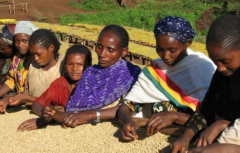
Ethiopia washed sidamo sidamo G 2 fine coffee beans origin development history and culture introduction
Sidamo is a famous boutique coffee region in southern Ethiopia, bordering Kenya. Sitama treated by washing is light green, small beans, oval growth, full fruit, good average quality, mellow smell, a drop of mouth, endless aftertaste, with wild beauty. Sidamo coffee is very diverse in flavor, different soils

A brief introduction to the History and Culture of the Origin and Development of Fine Coffee beans in Shaqisuo producing area
Harald Coffee this coffee grows in areas ranging from 900m in the Darolebu plain to 2700 m in the highland mountain range of Chercher in eastern Ethiopia. These mountains do provide unique characteristics for these perennial coffee beans: the fruit is full and long, moderately acidic, and the typical mocha is refreshing.

Ethiopian Coffee Manor Fine Coffee Bean Origin, Development, History and Culture
In December 1994, the Constitution of the Federal Democratic Republic of Ethiopia was formulated. According to the Constitution, Ethiopia will implement a federal system and a parliamentary cabinet system after the general election for a term of five years. After the national election in May 1995, the Federal Democratic Republic of Ethiopia was established on August 22, and Meles became prime minister in her capacity as chairman of the majority party of the people's House of Representatives. On May 14, 2000, Ethiopia held a national meeting
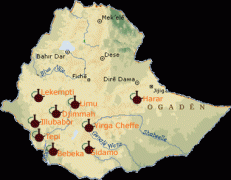
Ethiopia washed Sidamo G1 Shakiso shakisso boutique coffee beans: a brief introduction to the origin, development, history and culture
[factory introduction] Shakisso/Shakiso is located in the Guji producing area of Sidamo, in the south of Oromia, close to Sidama and Gedeo. There are many pits in this area, which were used to mine gold in the early days, so there are many potholes in this coffee growing area. This makes people dangerous when walking between coffee growing areas. Xia Qi Soze

Fine Coffee Culture History Coffee Communication History (1)
In 622, Muhammad, the prophet of Islam, led the believers to migrate from Mecca to Medina and began to establish a church state, which developed into a powerful empire spanning Central Asia to the Liberian Peninsula in a century. Ethiopia, the origin of coffee, was included in the Ilan Empire and remained independent as a Christian country. Coffee began to flow from Ethiopia to Afghanistan in the early 11th century.
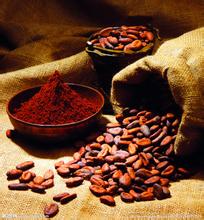
Ethiopian Coffee Culture the Development of Ethiopian Coffee
Ethiopian Coffee has a long History Ethiopian Coffee has a very important history and culture the highest grades of Ethiopian coffee Yega Xuefei G1 G2 Sidamo (Yirgacheffe, Sidamo) are grade 2 and 3 (G2, G3), while sun-processed coffee in eastern Ethiopia is mostly grade 4 or 5 (G4, G5). In many cases, level four coffee is marked as level five.
A brief History of World Coffee (1) the World History of Fine Coffee
In 622, Muhammad, the prophet of Islam, led the believers to migrate from Mecca to Medina and began to establish a church state, which developed into a powerful empire spanning Central Asia to the Liberian Peninsula in a century. Ethiopia, the origin of coffee, was included in the Ilan Empire and remained independent as a Christian country. Coffee began to flow from Ethiopia to Afghanistan in the early 11th century.

A brief introduction to the History and Culture of the Origin and Development of Fine Coffee beans in Shaqisuo producing area with rich thickness
Wollega (Nekempte) coffee comes from the west of Ethiopia, with medium to large beans and is famous for its fruity flavor. The color is green and brown (greenish,brownish color), and the acidity and alcohol thickness are good. Can be made to match, can also be individual products. Limu Coffee coffee is famous for its aroma and wine flavor (spicy and Winnie flavor).

A brief introduction to the Origin, Development, History and Culture of Fine Coffee beans in Tanzania
Product features: smell: flower scent, clean and delicate lemon fragrance. Clean, full, it is mild and does not stimulate the smell after extraction: a variety of floral flavors: bright acidity, mellow taste, and thanks to the rich volcanic soil, it has the sweetness of mineral water, because we use medium baking techniques to make it smooth and elegant with acidity. The whole is softer than Ethiopia.